Projects
MyDay app iconMyDay

Live product · Used in real events

Founder · Product Architect · Software Engineer

A connected platform for planning, coordinating and running events.

Web + iOSUsed in real eventsLive production systemInvestor conversations · Opening soon

Overview

From a planning problem to a live operating platform

MyDay started with a real problem: planning a large event meant jumping between messages, lists and disconnected tools. The first goal was simply to bring that work into one place. As the product moved into real-world use, it evolved from an event planner into a platform that connects the people, data and workflows around an event.

My role

I initiated MyDay and have owned its product and technical development to date — from product structure and architecture through interface design, backend systems and data modeling, mobile delivery, integrations, release engineering and production operations.

Two partners support Operations and Marketing.
Product scope

One event, one connected operating system

The value is not in collecting more tools. It is in connecting the decisions and workflows that depend on each other.

Event Planning & Operations

Event setup, event hub, venue and date planning, schedules, tasks and operational workflows that move with the event.

Guest Operations

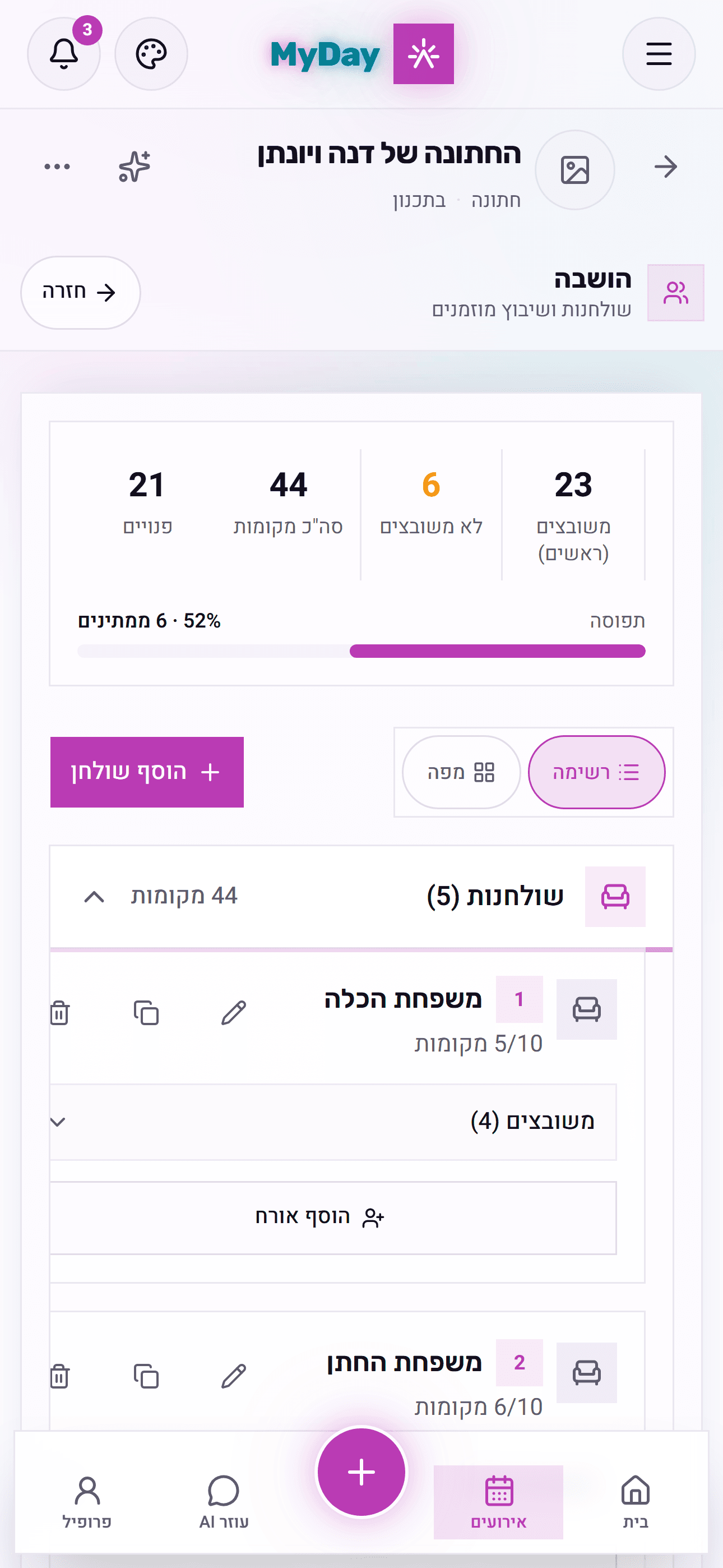
Guest management, personal RSVP, digital invitations, families and companions, seating, transportation, waitlists and check-in flows.

Finance & Suppliers

Budgeting, spending and payment tracking, shopping, supplier management, estimates, commitments and the financial picture around an event.

Communication & Engagement

WhatsApp messaging, reminders, email, push, in-product notifications, delivery state and guest photo galleries.

Vendor Platform

Vendor profiles, availability, reviews and workflows that let event businesses operate within the same platform.

Venue OS

Spaces and capacity, calendar, CRM, leads, proposals, bookings, menus, floor plans and contracts for venue operations.

Platform Operations

Internal administration for users, events, vendors, support, system health, product operations, release readiness and market intelligence.

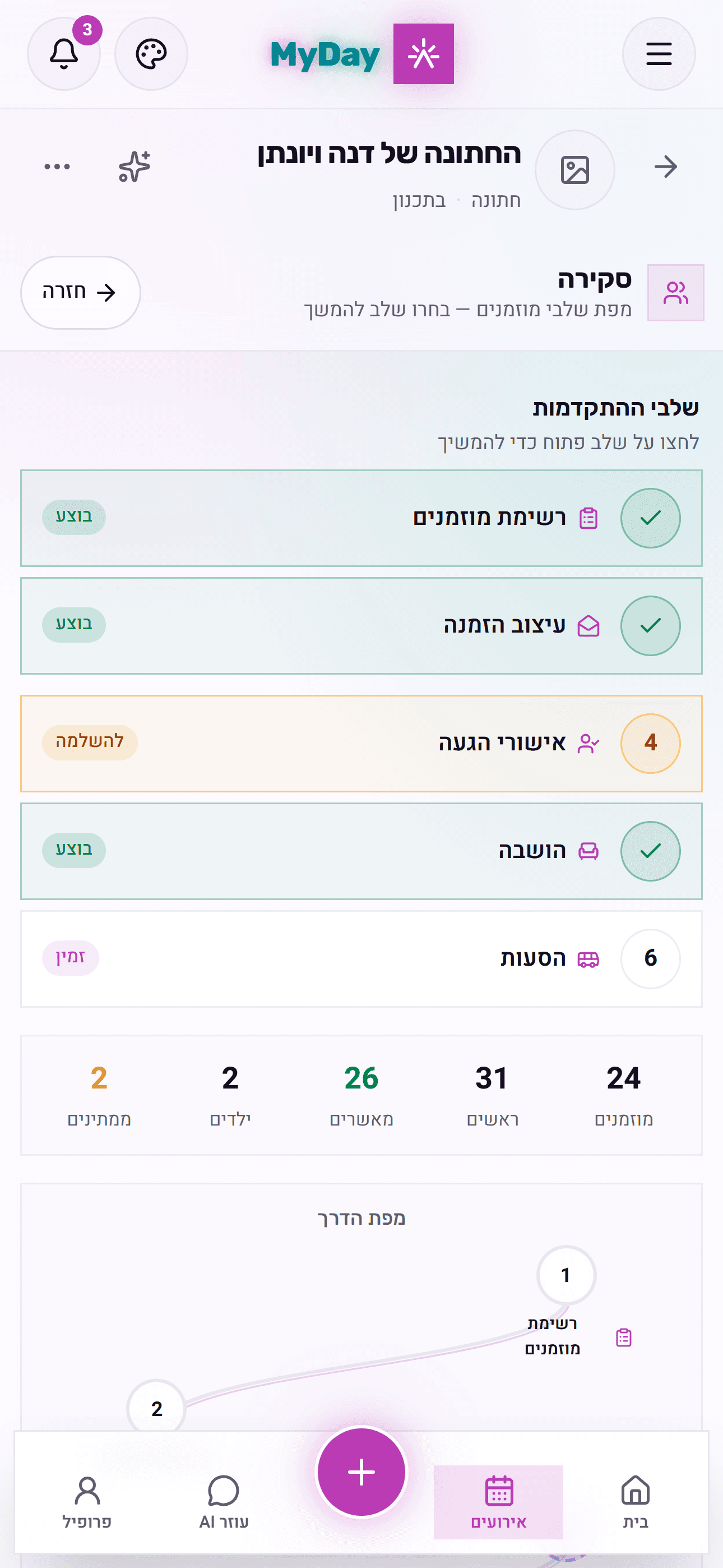
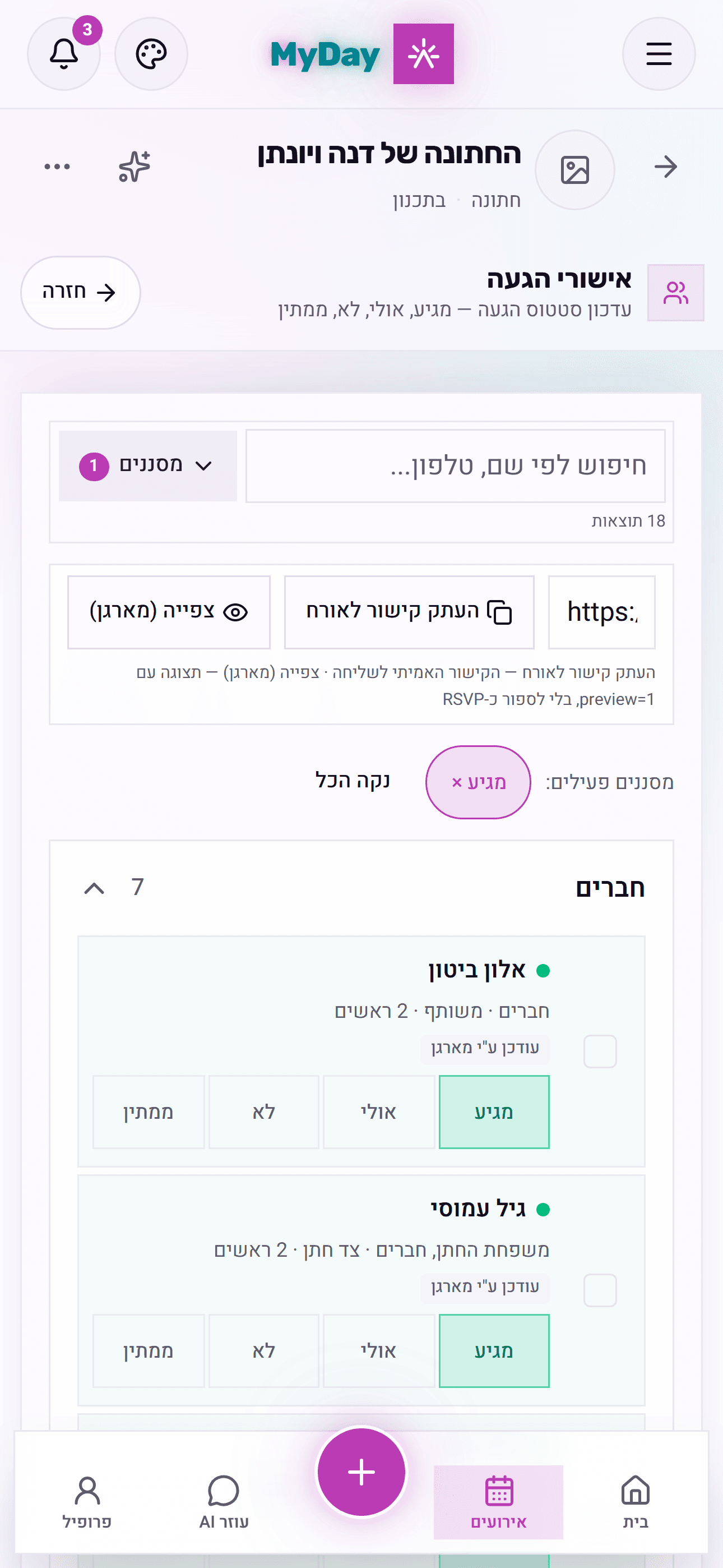
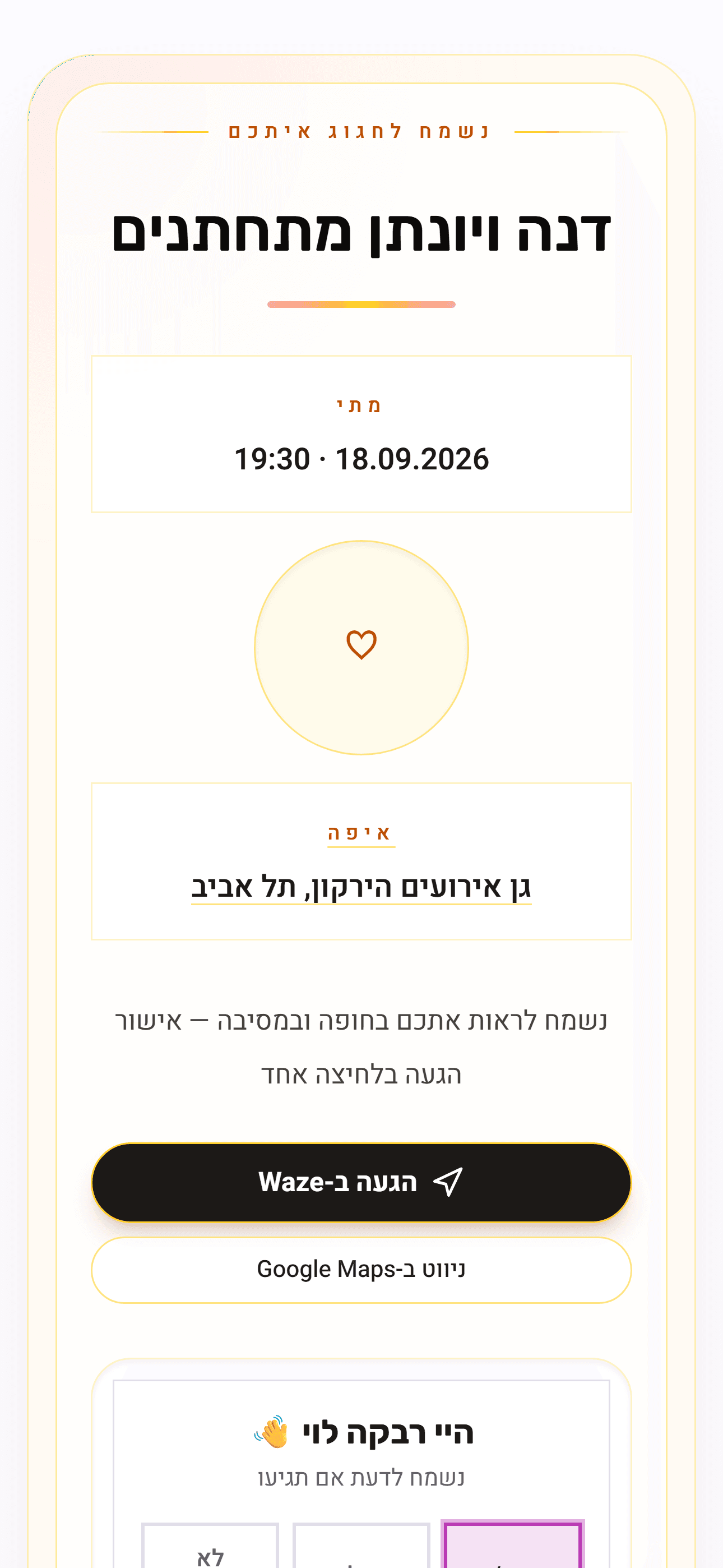
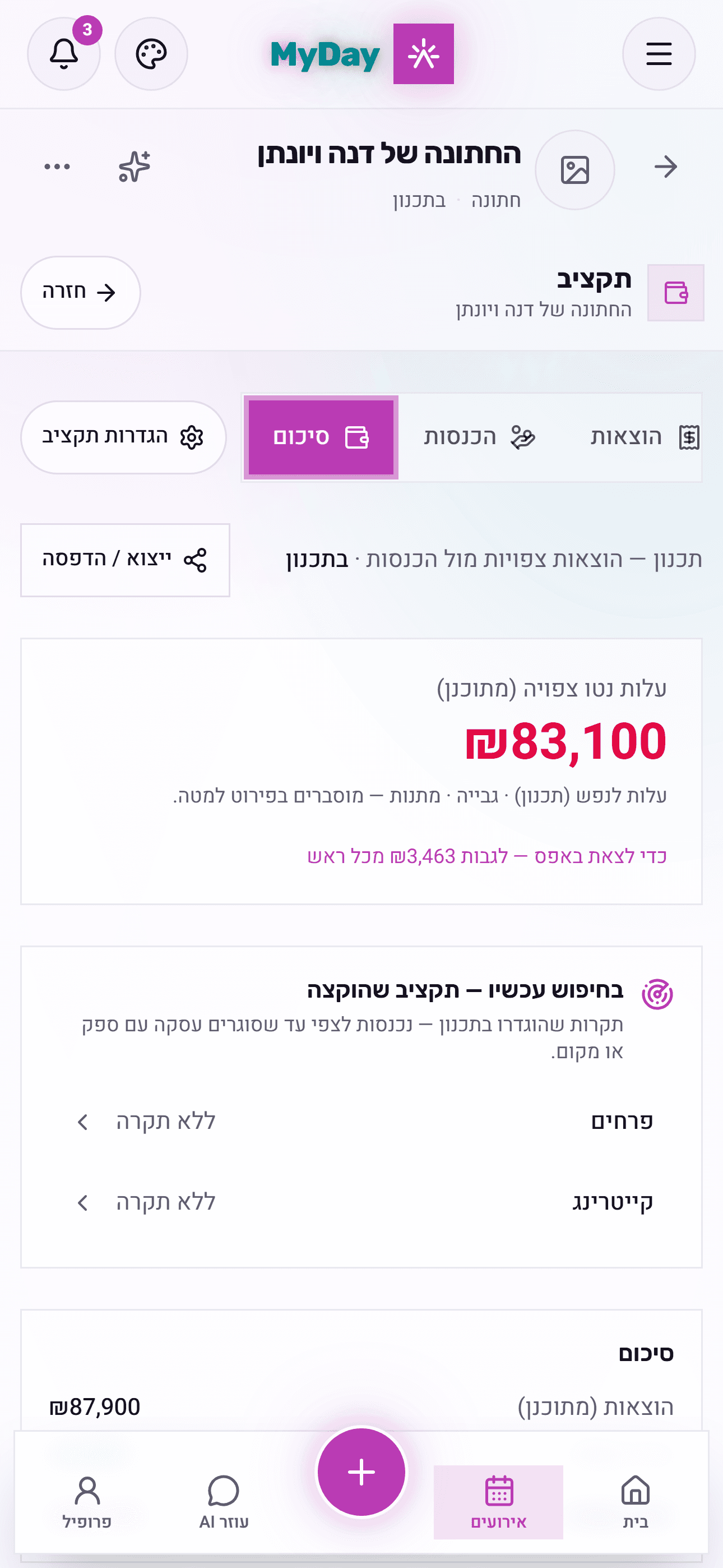
Inside the product

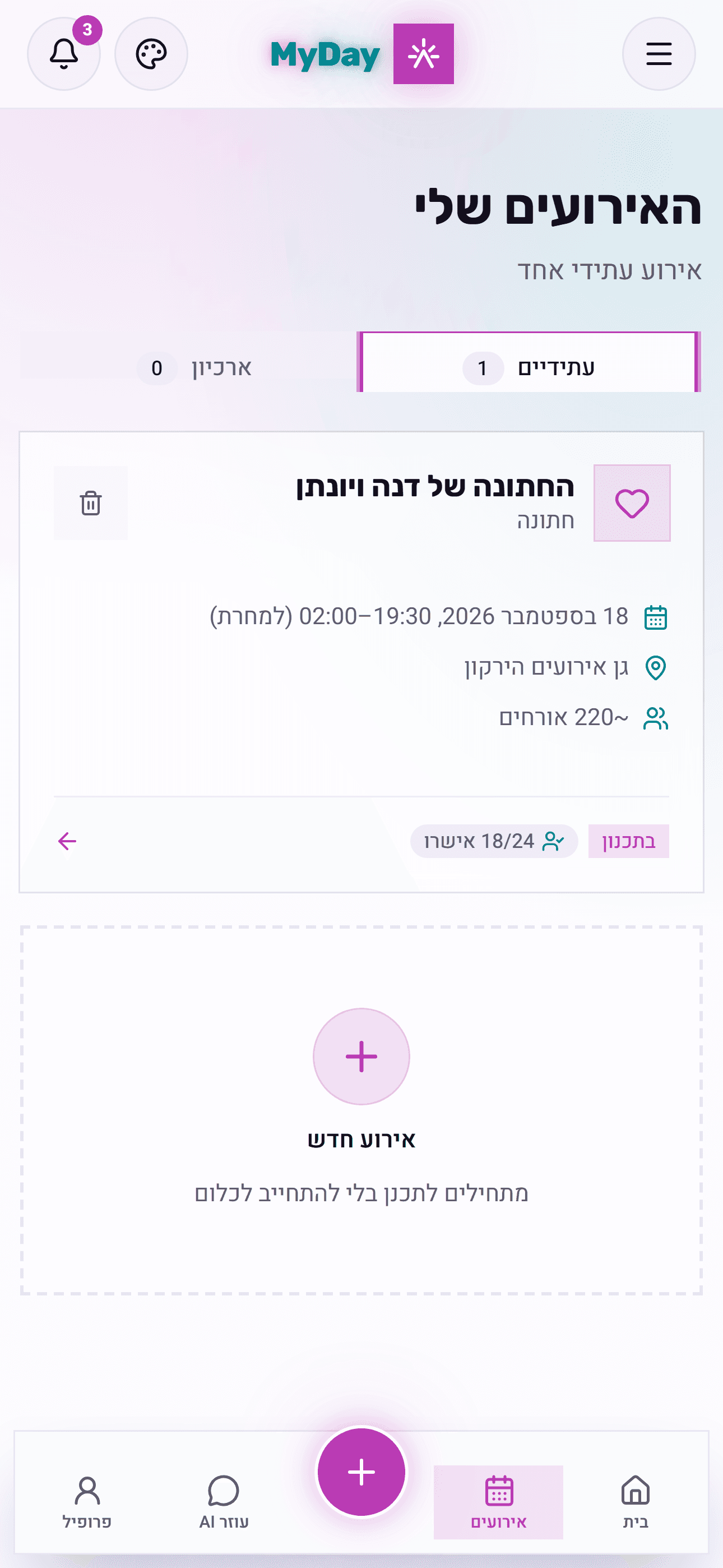
Dashboard
Dashboard
Event Hub
Event Hub
Guests
Guests
Budget
Budget
Suppliers
Suppliers
Seating
Seating

Users & workspaces

Different users, one connected platform

Each workspace serves a different job while sharing the same identity, data and platform foundations.

Planner

The organizer managing the event and its planning process.

Guest

The attendee receiving a personal invitation, responding to RSVP and using event-specific services.

Vendor

A supplier managing their presence, availability, reviews and workflows on the platform.

Venue

A venue team managing leads, availability, proposals, spaces and booked events.

Admin

The team operating, monitoring and managing the product and platform itself.

Architecture

Designed as a platform, not a collection of screens

MyDay separates product surfaces from shared platform services and domain logic so the system can grow without forcing every workflow into the same layer.

Product surfaces

PlannerGuest / PublicVendorVenueAdmin

Application & domains

Domain workflowsServer ActionsAPI routesBusiness rules

Core platform services

Identity & permissionsMessagingNotificationsAIPaymentsFiles

Data platform

PostgreSQLMigrationsDomain dataTransactions

External systems

AppleWhatsAppResendOneSignalGoogle PlacesVercel

Business rules stay close to their domains, while shared infrastructure is extracted only where the behavior is genuinely common.

Engineering challenges

The interesting work is in the boundaries

Selected examples show how product requirements turn into architectural and engineering decisions.

Authorization beyond simple roles

Owner, co-host and viewer are useful labels; explicit capabilities define what each person can actually do.

Identity and authorization are handled as product rules rather than UI conventions, so permissions remain consistent as the system grows and new workflows are added.

Public guest access without private-data leakage

Guests receive a personal event experience without receiving the private event model.

Guest-facing flows are designed as a separate public surface with deliberately limited information and server-side controls, rather than exposing a filtered version of the private event workspace.

Transport reservations, capacity and waitlists

Bookings stay consistent when a ride fills up, party size changes or RSVP state is updated.

Transport availability, registration, waitlists and attendance changes are connected so logistics stay consistent when the event state changes instead of requiring manual correction in multiple places.

Multi-tenant venue scheduling

Each venue is isolated while overlapping bookings for the same space are prevented.

Venue scheduling models spaces, time windows and booking state as product data, allowing availability conflicts to be detected reliably as leads move into booked events.

AI that can act without acting silently

The assistant can use product tools and context while meaningful writes remain under user control.

The assistant uses product context and tools to answer useful questions and support real work, while meaningful changes remain visible to and controlled by the user.

One product across Web and Mobile

The web application remains the source of truth while native capabilities are added where they matter.

Capacitor and PWA delivery extend the product to mobile without duplicating the application. Native contacts, push, safe-area behavior, App Store distribution and in-app purchases are layered onto the shared product core.

Quality & production

Engineering quality is part of the product

A live product needs evidence of reliability, not only feature breadth. The current codebase combines automated verification, production observability and documentation that stays connected to implementation.

Current codebase snapshot
documented modules
90+
application pages
100+
test files
250+
E2E scenarios
50+
database migrations
70+
CI quality gatesTypeScript, lint and build validationUnit, integration and browser testingMigration disciplineSentry and structured loggingHealth checksAccessibility testingLighthouse checks

Technology

The stack behind MyDay

Technology is shown last because it is the implementation layer behind the product and engineering decisions.

Web & Frontend

Next.jsReactReact Server ComponentsTypeScriptTailwind CSSSWR

Backend & Data

Server ActionsAPI RoutesPostgreSQLNeonDrizzle ORM

Identity & Security

Better AuthAuthorizationAccess controls

AI & Communication

Vercel AI SDKGeminiWhatsApp Cloud APIResendOneSignal

Mobile & Commerce

CapacitoriOSPWAApple IAPApp Store ConnectFastlaneTestFlight

Delivery & Operations

VercelGitHub ActionsVitestPlaywrightSentryAnalyticsSpeed Insights

Product breadth, backed by engineering depth

MyDay is one product, but it demonstrates the same reusable capabilities that appear across the rest of this site: product architecture, full-stack engineering, backend and data design, identity, AI, integrations, mobile delivery and production operations.

Explore capabilities

Next stage

Building the next stage of MyDay

MyDay is moving from product validation into its next stage of growth. We’re preparing to open conversations with strategic investors who understand software, marketplaces, event technology or vertical SaaS.

Investor conversations — opening soon